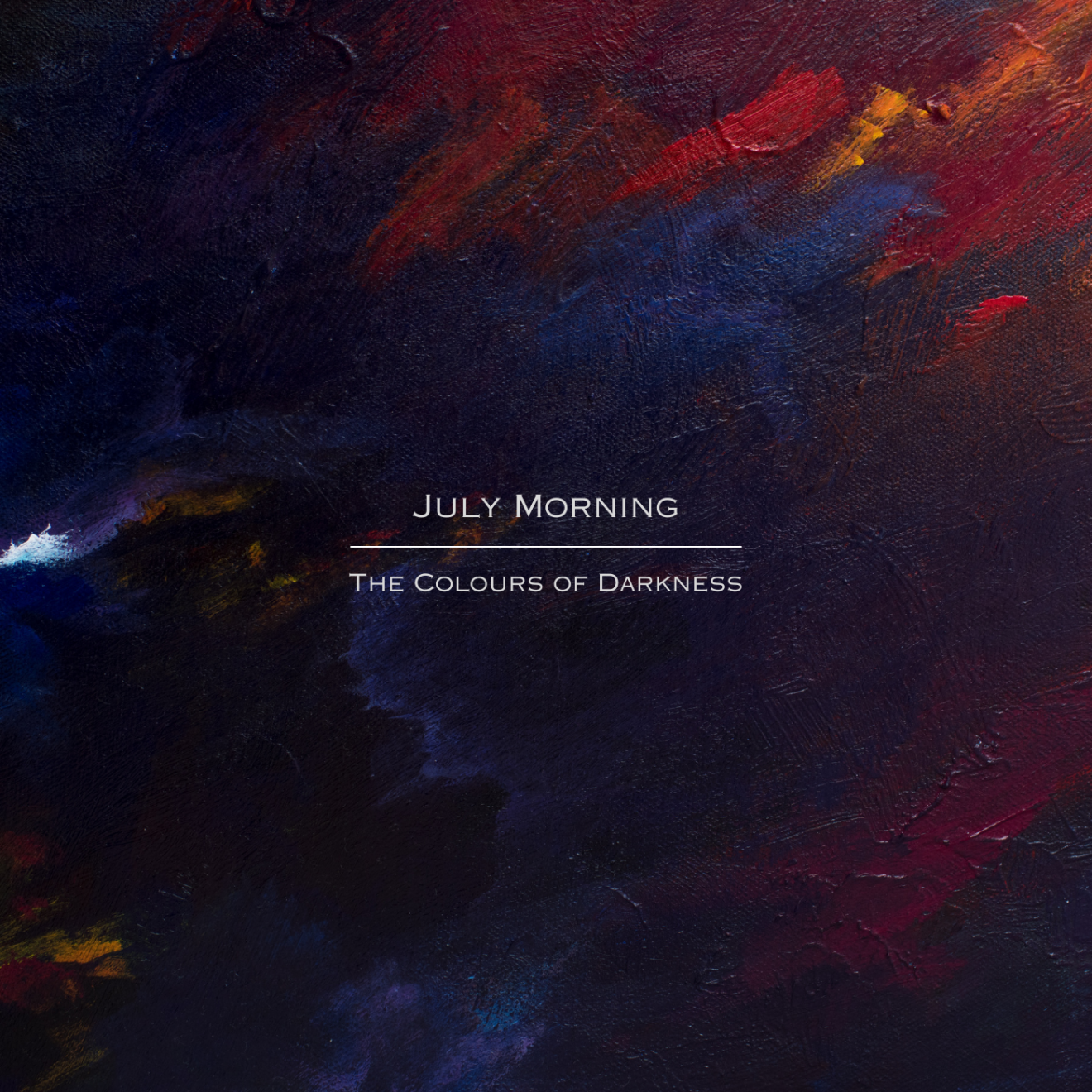
JULY MORNING
On their latest album release
The Colours of Darkness
Written by Siena Robb
Photography by Sylvia Iles
Sydney rock band July Morning occupy a space between introspective indie rock and expansive philosophical storytelling. Their debut album, The Colours of Darkness, explores everything from fractured family dynamics and identity struggles to larger questions about purpose, uncertainty and what it means to simply exist.
Rather than approaching the album as a collection of standalone tracks, the band set out to create a cohesive artistic statement, one that balances deeply personal experiences with broader existential themes. The result is a record that feels both intimate and ambitious, moving between individual stories and universal questions.
For July Morning, The Colours of Darkness isn’t simply a collection of songs, it’s an attempt to make sense of the uncertainty that comes with being alive. Across the record, the Sydney band moves between deeply personal reflections and larger philosophical questions, exploring relationships, identity and the often uncomfortable realities of existing in an increasingly chaotic world.
Rather than approaching the album as a series of disconnected moments, the band set out with a clear artistic vision. The result is a record that feels cohesive without being restrictive, allowing individual tracks to explore different experiences while remaining tied together by a shared sense of introspection. Whether examining the complexities of human connection or wrestling with questions that have no easy answers, The Colours of Darkness constantly searches for meaning without pretending to have found it. There’s a thoughtful balance throughout the album between the personal and the universal. While many of the songs are rooted in specific experiences, they leave enough room for listeners to find pieces of themselves within them. That tension between individual stories and broader human experiences sits at the heart of the record, giving it an emotional weight that extends beyond any single track.
We caught up with July Morning to discuss the ideas behind The Colours of Darkness, the challenge of building a thematically connected album, and why some of life’s biggest questions are often the ones that matter most.
EXISTENTIAL QUESTIONS AND ARTISTIC INTENT
When you think about The Colours of Darkness as a complete work, it feels like there are some pretty big existential questions running through it. Was there a particular feeling or idea that connected everything together from the beginning?
“The challenges of simply being here. All the tracks sum to that loose concept, which drives the entire album thematically. Whether it’s tackling fraught family relationships, confronting failing romantic relationships, struggling with self-identity, or trying to overcome our darkest moments, we wanted to take the personal and make it broader, more philosophical.”
“What does it mean to even be here? Why must we continue on and struggle to be here? What does that look like, and how do you do it? And what comes of it all in the end?”
“Musicians can probably answer this for everyone—we certainly didn’t, and it would be foolish to think we could, but we think it’s an artist’s job to at least raise these questions about life, especially in our shared modern world, which is rife with conflict and uncertainty.”
That sense of a larger artistic statement comes through strongly. Was there a moment when these songs stopped feeling like individual pieces and started feeling like an album? Or was that always the intention?
“For us, the project was always going to be an album. We started with a unifying concept and vision for the artistic statement we wanted to make, and so we set out with a focus on creating an eclectic album demonstrating our broad musical style with a central theme tying the tracks together. It’s not particularly in our style to want to record and release single after single and then just slap the biggest ones together on a record and pretend they collectively mean something. Perhaps that is because of the musical influences and work ethic we share. I’m personally interested in exploring grand ideas and discussing big topics, and so an album, rather than a disparate collection of songs, is the perfect vehicle for musicians to do that.”
With so much emotional and thematic weight across the record, sequencing must have been important. How intentional were you about the pacing and emotional flow from one track to the next?
“Pretty intentional. For an album that tackles some quite heavy topics, we realised we needed to have balance in the songs and in the sequencing of those songs.”
While the album grapples with weighty ideas, its impact also comes from the way those themes unfold across the tracklist. Rather than treating sequencing as an afterthought, July Morning approached the record as a complete listening experience, carefully considering how each song would contribute to the larger narrative.
BUILDING A COHESIVE ALBUM
One of the first songs listeners heard was “The Canary Song.” What made that track feel like the right doorway into the world of the album?
““Canary” was one of a few lead singles we put out as we led up to the album, but we felt this song would make for a good introduction to the band for some. We figured that the sleazy sounding guitar riff would find its audience and the characterisation of a rich scumbag narrator is as timely as ever right now.”
It's an interesting choice because in some ways it stands apart from the rest of the record. What do you think “The Canary Song” reveals about the album that might not be obvious on first listen?
“It does stand out from the rest of the album quite a bit, on account of it being built around fuzz-driven guitars and being a social and political satire, whereas the rest of the album focuses more on inter- and intra-personal topics and never quite gets as heavy. So I think in that way, “The Canary Song” might unexpectedly give listeners an idea of the versatile sound we were going for.”
The single arrived in January, a few months before the album landed in April. Did having that song out in the world early affect how you thought about the rest of the record being heard?
“Not at all. While we want to emphasise we are an album-rock band first and foremost, we understand in the current cultural climate that some people will only latch onto individual songs. They may not be interested in more than that from us, or even struggle to engage with our music beyond that single because of content nausea with so much music being available at all times. The album is still the album to us, and fans of conceptual albums are the fans we’re most interested in finding and building relationships with, but we see ourselves as very fortunate any time anyone listens to any of our music and finds something they like about it, even if it’s the only song they know.”
One of the album’s greatest strengths is its ability to remain deeply personal without becoming inaccessible. Although many of the songs draw from specific moments and relationships, they avoid prescribing a single meaning, instead inviting listeners to bring their own experiences into the music.
SONGWRITING AND INTERPRETATION
As you've mentioned, the album moves between personal experiences and bigger philosophical ideas. Were there particular themes or emotions you found yourselves continually returning to while writing?
“The major recurring themes are the different kinds of relationships—which we tackle in “Page After Page”, “Scorched Earth, and “Beacon”—and self-perception and identity—which are most prominent in “Upper Hand”, the title track, and “Fruitless Pursuit”. We wanted to tackle these themes (and others) simultaneously to sum to something bigger than their individual parts: something that is familiar and intimate, while being conceptual and philosophical. That was the sweet spot we were aiming for.”
There’s a lot of specificity in these songs, but also plenty of room for listeners to bring their own experiences to them. How much space did you want to leave for interpretation?
“We’ve aimed for a sweet spot somewhere in the middle—a point where our songs aren’t just an “I Am the Walrus” approach to lyric writing where the meaning is entirely left up to our listeners, and also aren’t entirely preaching a single message. While I wrote “Page After Page” as a lament that my mother’s psychosocial disability forever lodges a gap in our relationship, I don’t mention her or her affliction by name, and would like for our listeners to apply their own experiences and interpretations to a song like that.”
LOOKING BACK ON THE RECORD
Now that the album is finally out in the world, and people are living with it, how do you feel looking back on it as a complete statement?
“I think that’s a question for anyone who listens! We can say we are proud of what we’ve accomplished, and it was a great sense of individual and collective satisfaction to see the fruits of our work, because self-funding, writing, rehearsing, recording, producing and releasing an album is an immense undertaking. We just hope that we find our listeners, and the art we’ve created resonates with them in some way. That’s all a band can really hope for.”